FURSONA
UI/UX design and research
Visual design
Art direction
Problem: Pet adopters struggle to find companions that truly match their personality, leading to mismatched adoptions and frustration.
Solution: A personality-driven, survey-style platform that quickly matches users with compatible pets, providing clear next steps for adoption.
This case study explores how personality-driven matching can improve pet adoptions and prevent mismatched relationships. Inspired by the idea of a “dating-app” approach, it examines how pairing human and animal personalities can create lasting bonds. Through customer interviews and netnography, we uncover insights to guide UX strategy and prototype a smarter, more compassionate adoption experience.

Survey indicates a measurable link between personality traits and pet ownership.

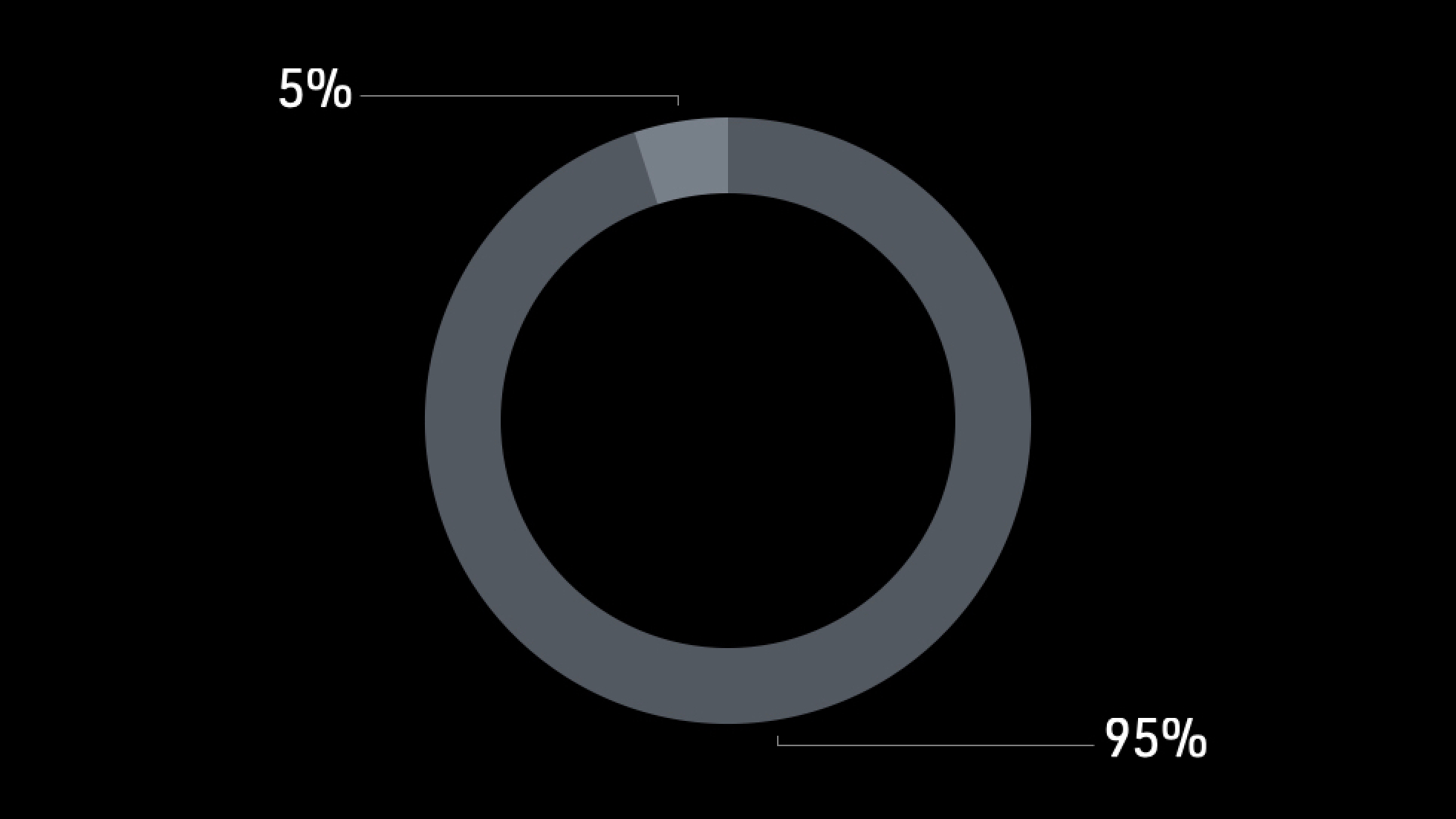
95% user satisfaction, validating personality-based pairing effectiveness.
The study examined how personality traits like happiness, introversion/extraversion, and androgyny influence young professionals' pet preferences. It found happier, more extroverted individuals prefer dogs, while androgyny had no significant effect. The PawsLikeMe platform uses a personality quiz to match users with pets, offering a wide range of adoptable animals and high user satisfaction, with fewer returns.
Personality and Pet Preference: Happier, extroverted college students often prefer dogs, linking personality traits to pet ownership.
Importance of Pet Ownership: The study highlights pet ownership potential to enhance happiness and well-being.
Relevance of Pet-Matching Services: PawsLikeMe has matched over a million pets with over 95% user satisfaction, proving effective in connecting compatible pets and owners.
Needs help choosing the right type of pet due to her fast-paced schedule. Many breeders and shelters are too far, and newborns don’t show clear personalities, making compatibility hard to gauge. Her goal is to find an independent, easygoing companion that fits her lifestyle and gives her confidence in her choice from the start.

Wants a pet that fits his lifestyle but isn’t sure which type aligns with his routine and personality. Feels overwhelmed by the number of options and unsure how shelter behavior translates to real-home behavior. His goal is to find a pet that naturally “vibes” with him—compatible energy, low stress, and long-term companionship without guesswork.

Jason needs to find a large dog to adopt so he can have a running buddy and a snuggly lifelong friend.
The user takes a survey to determine what type of animal they pair with. This task flow outline is based on the persona Jason.

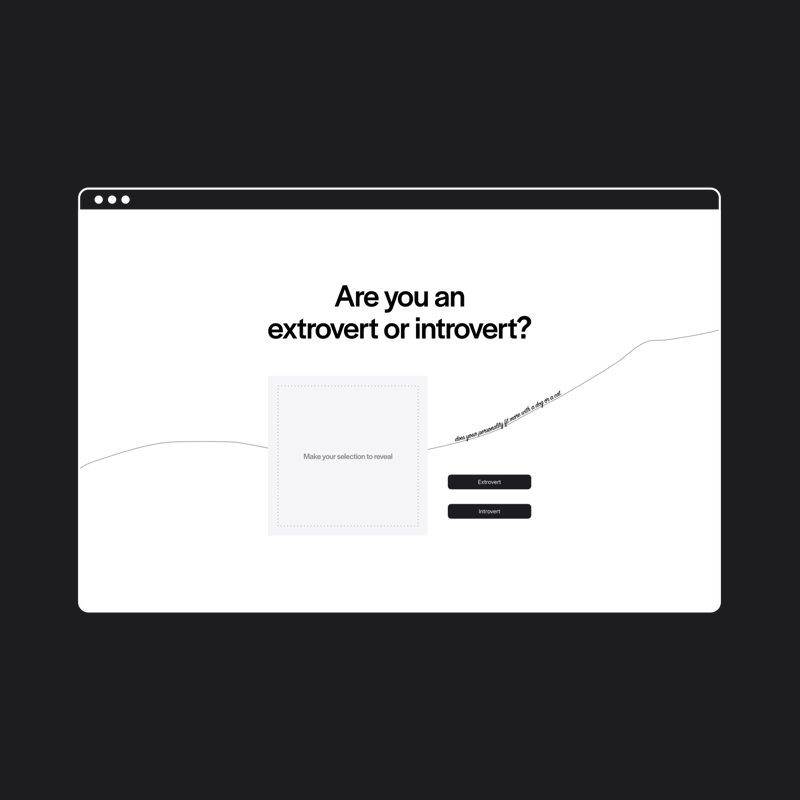
This wireframe is reflects the above task flow based on the persona Jason.
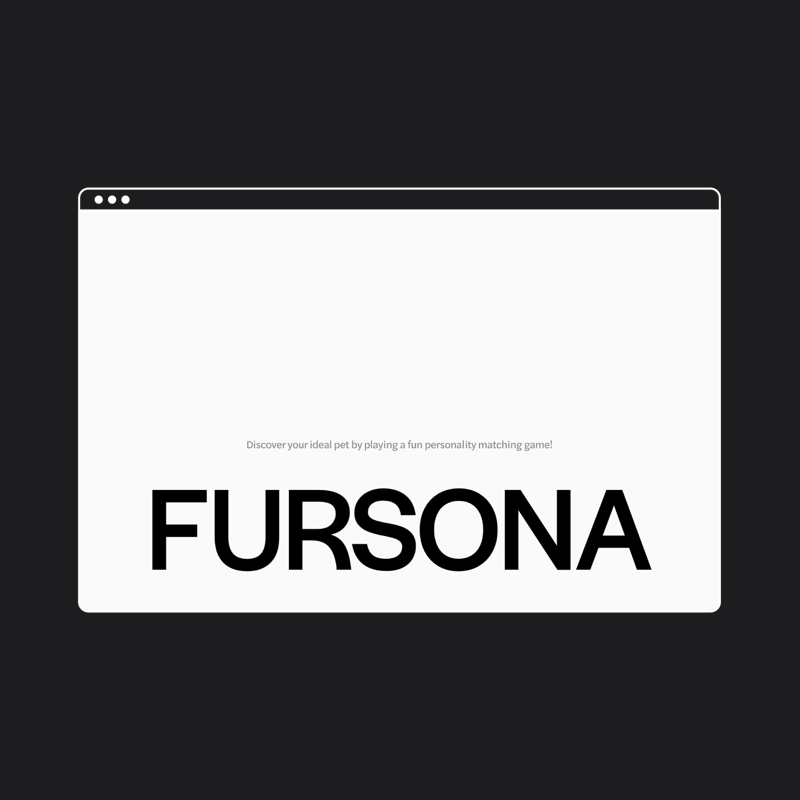
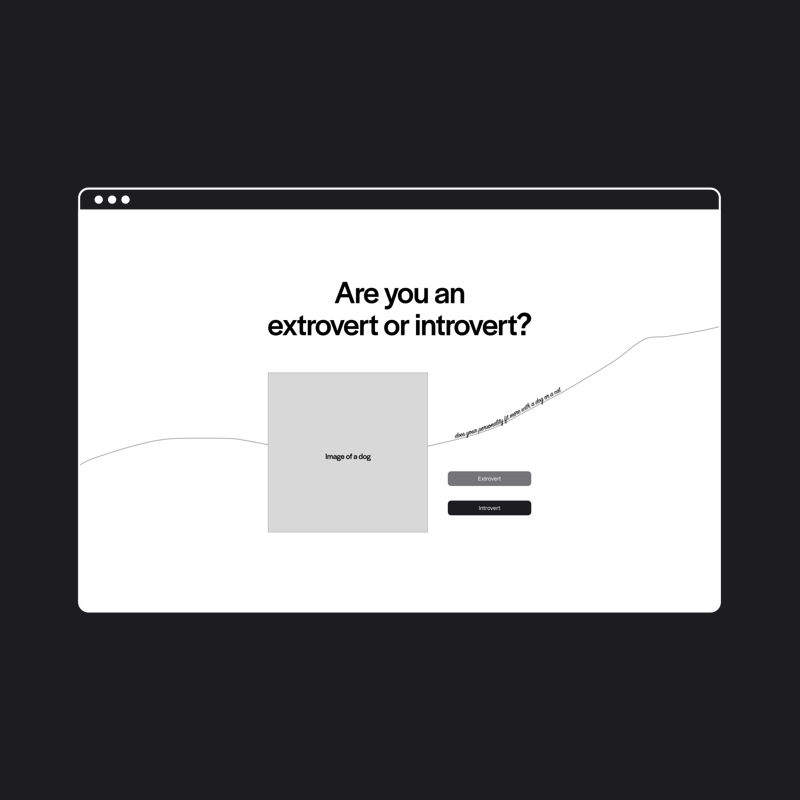
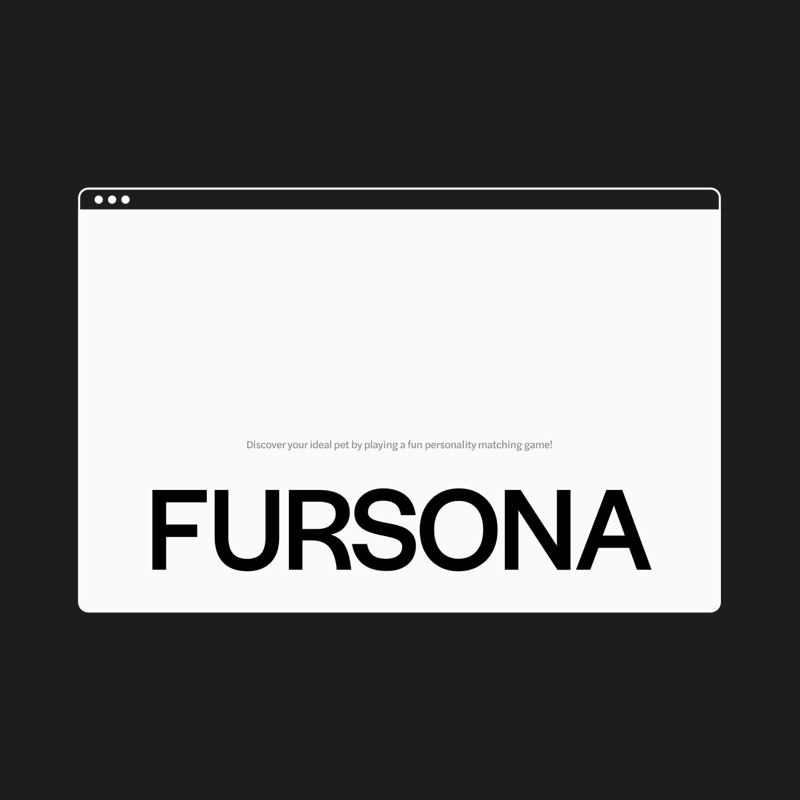
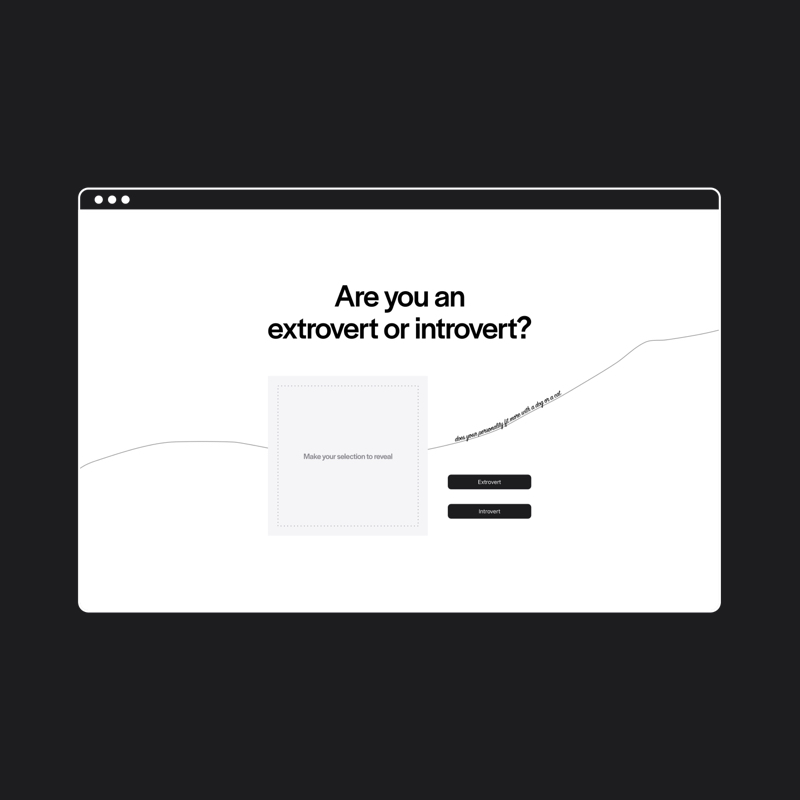
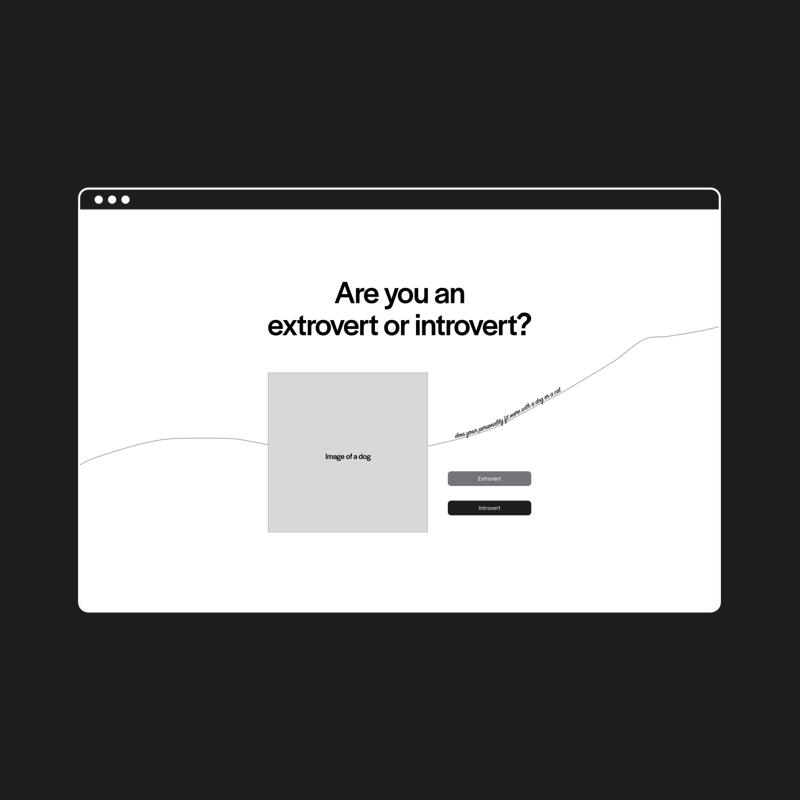
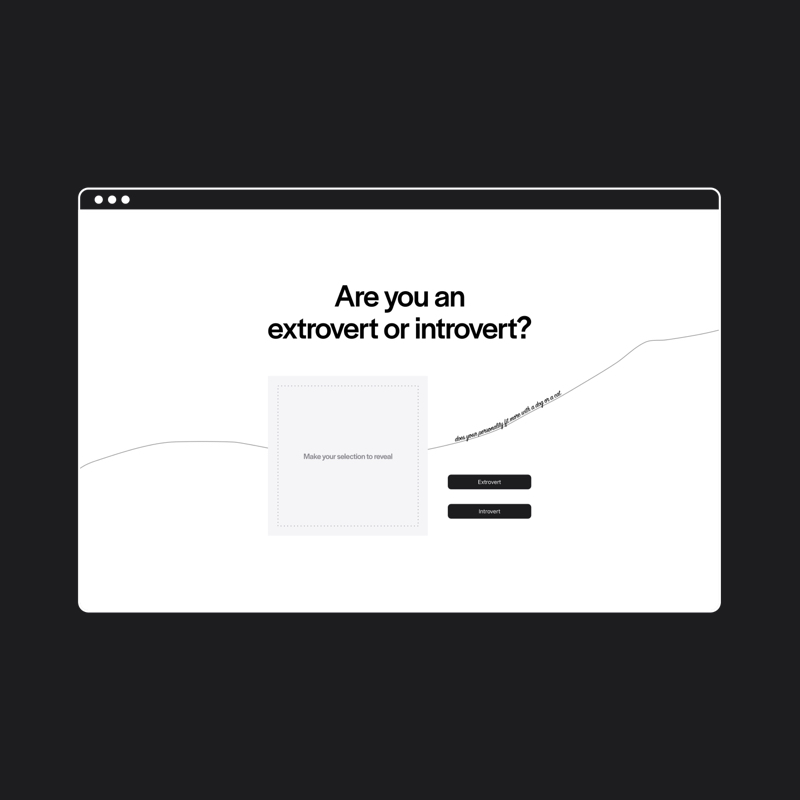
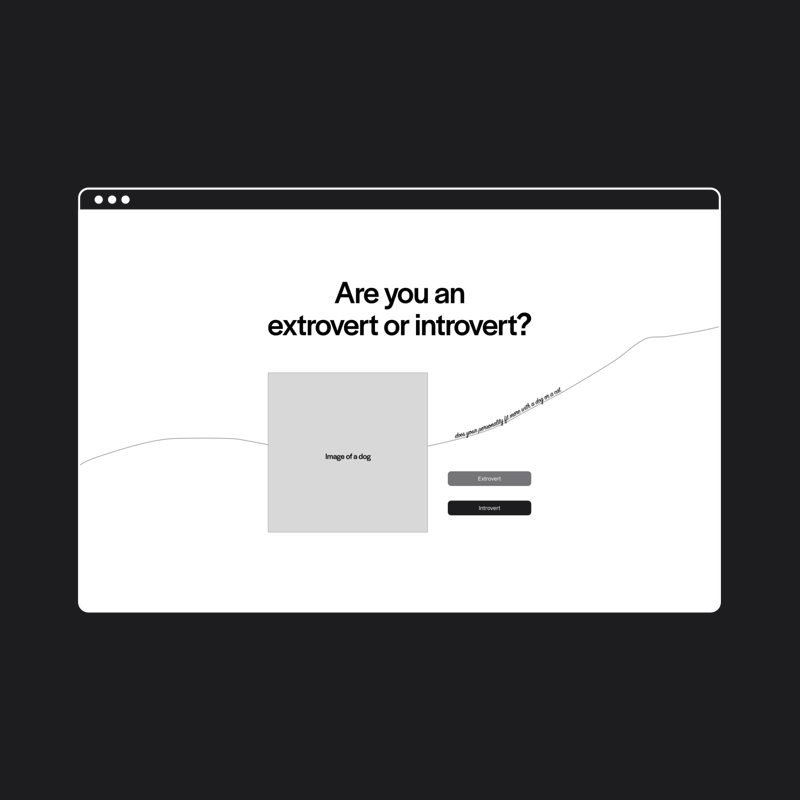


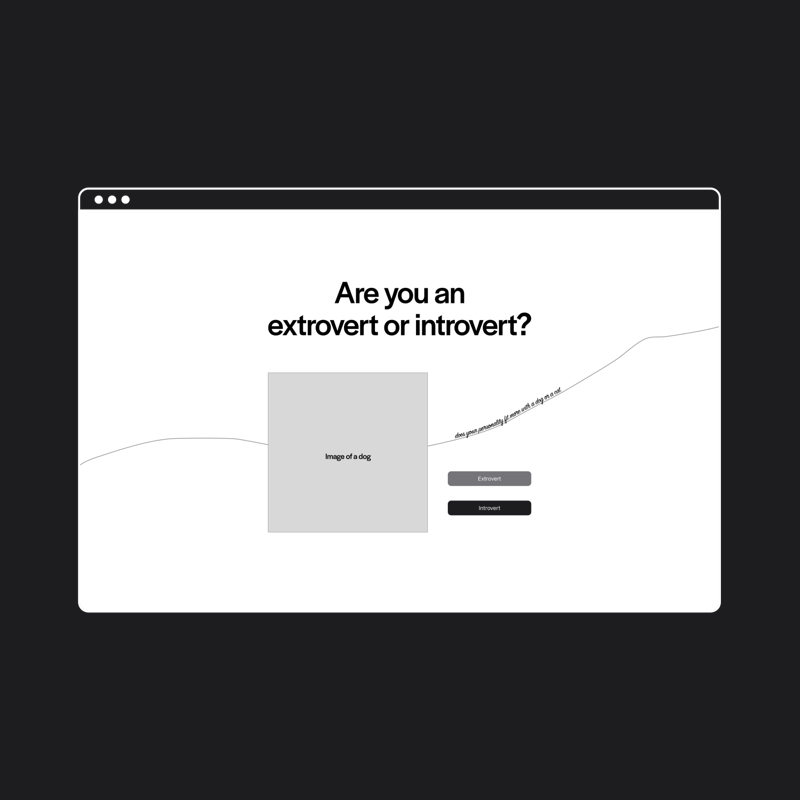
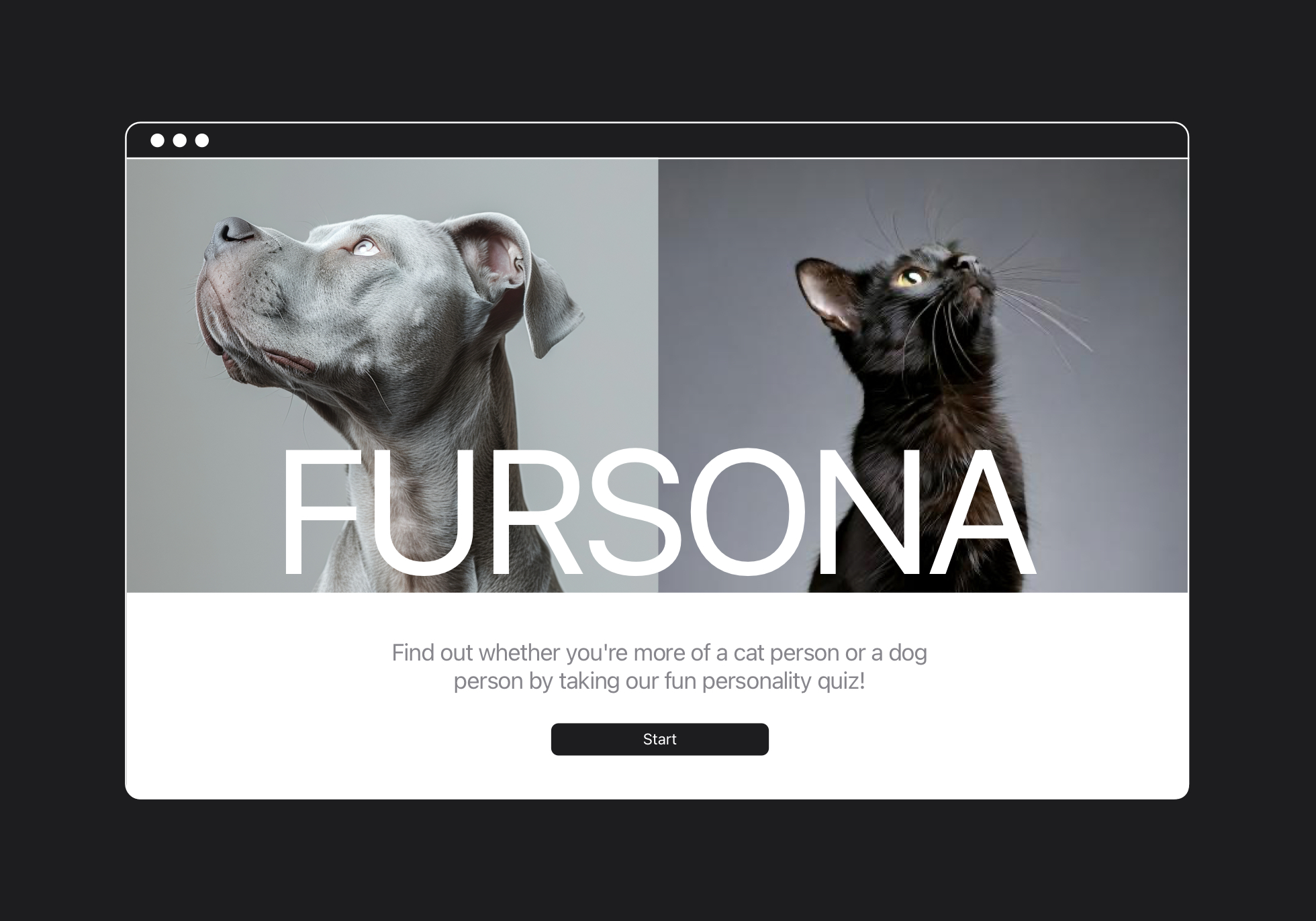
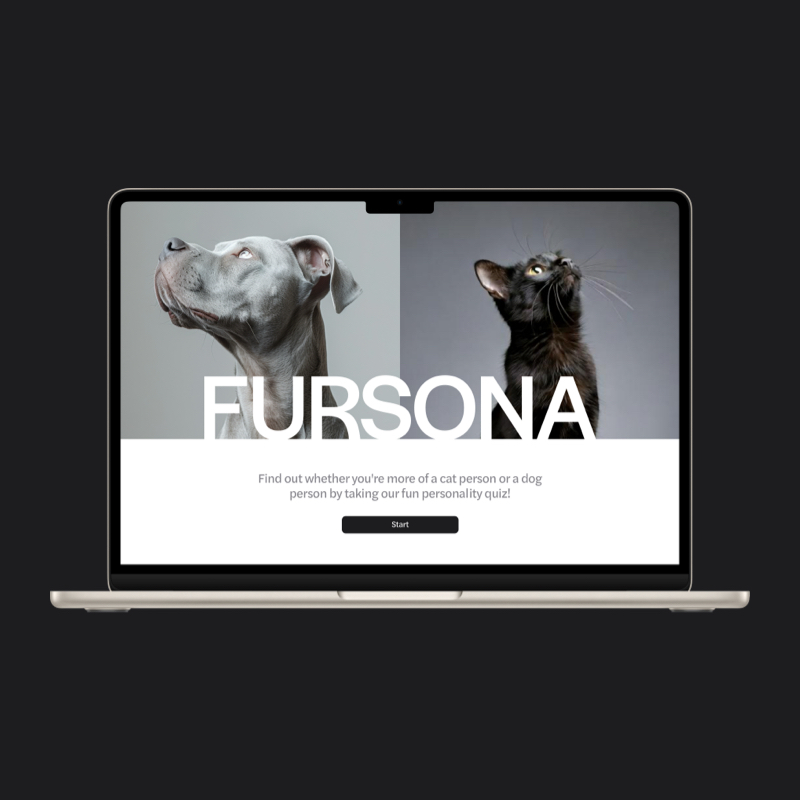
Research showed the dog–human image implied dog-only results, so both pets needed to appear. Users relied on visuals, prompting a shift to cat-plus-dog imagery for clarity.
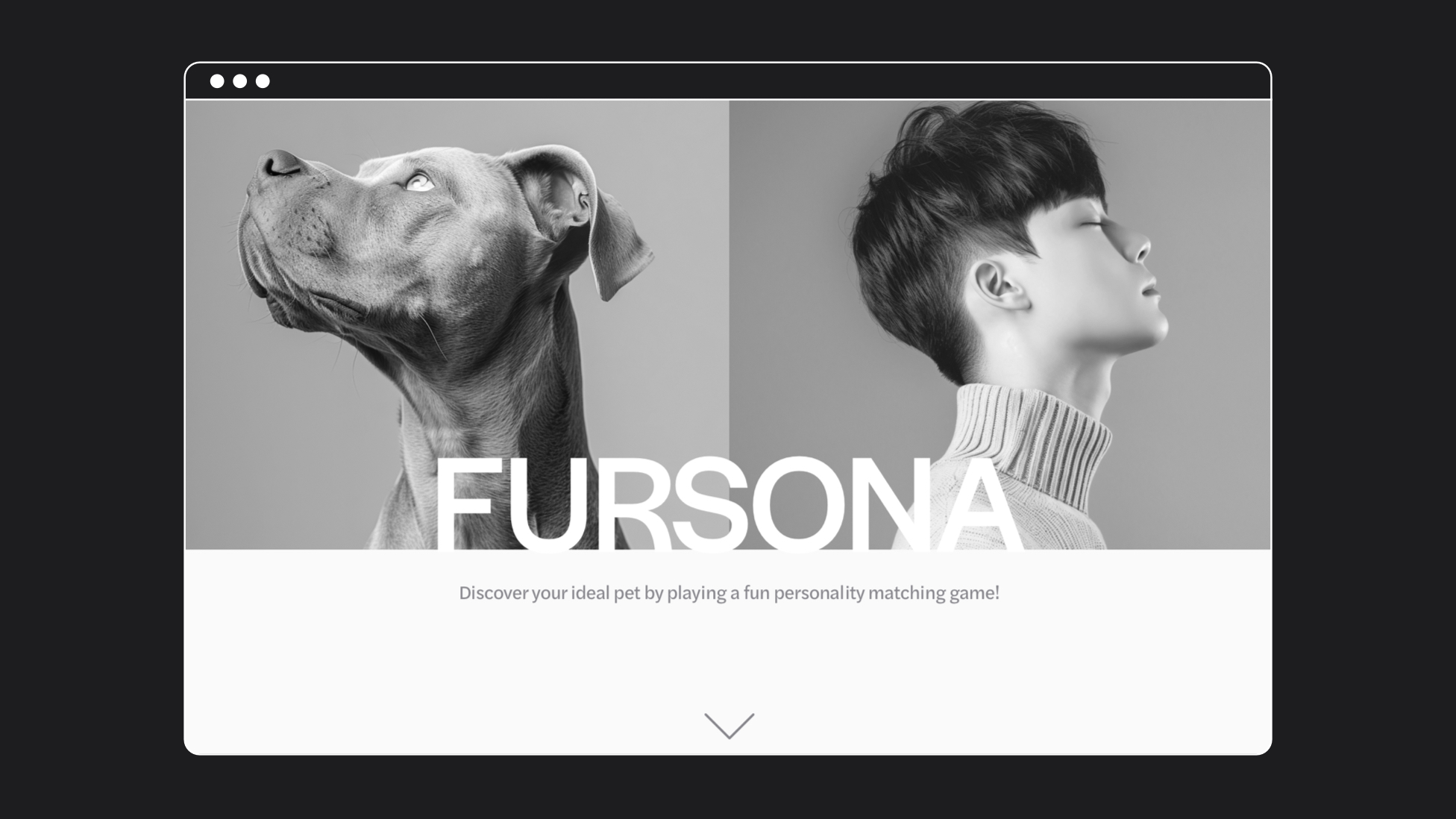

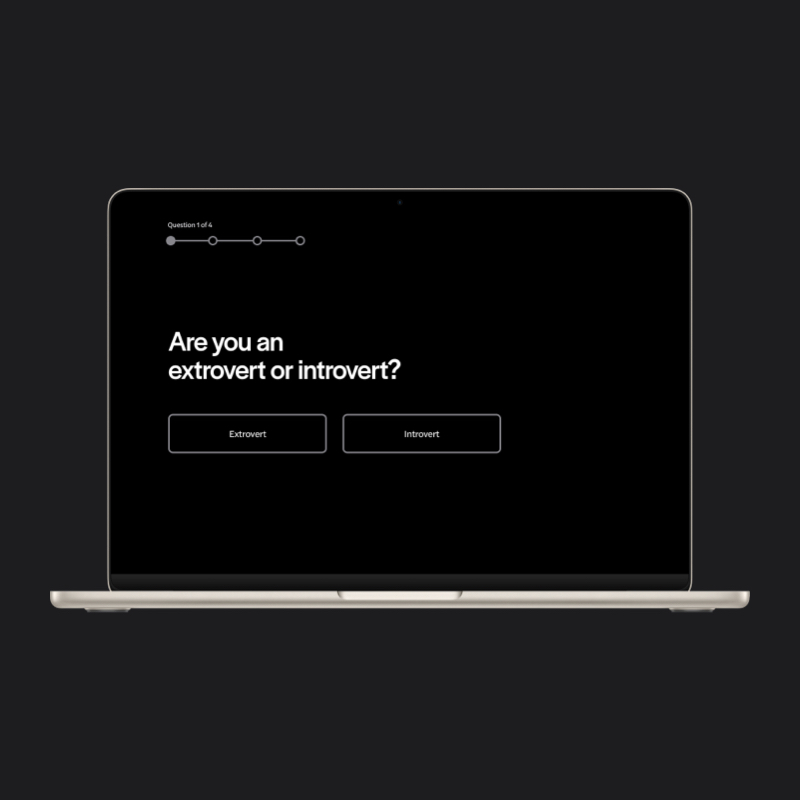
Research showed users preferred faster results over a long, game-style flow. Insight revealed a quick, survey-based format felt clearer and more efficient.
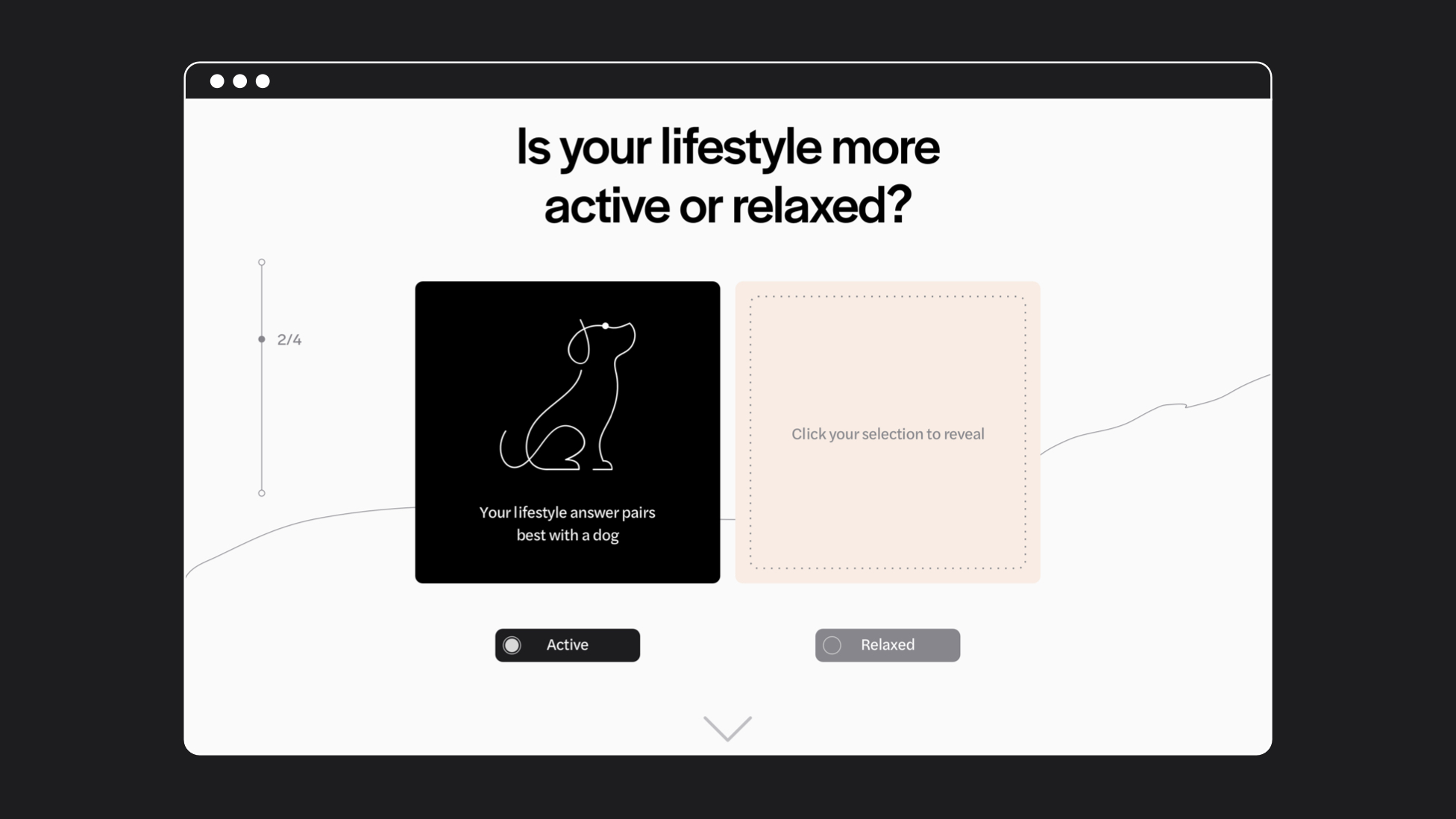
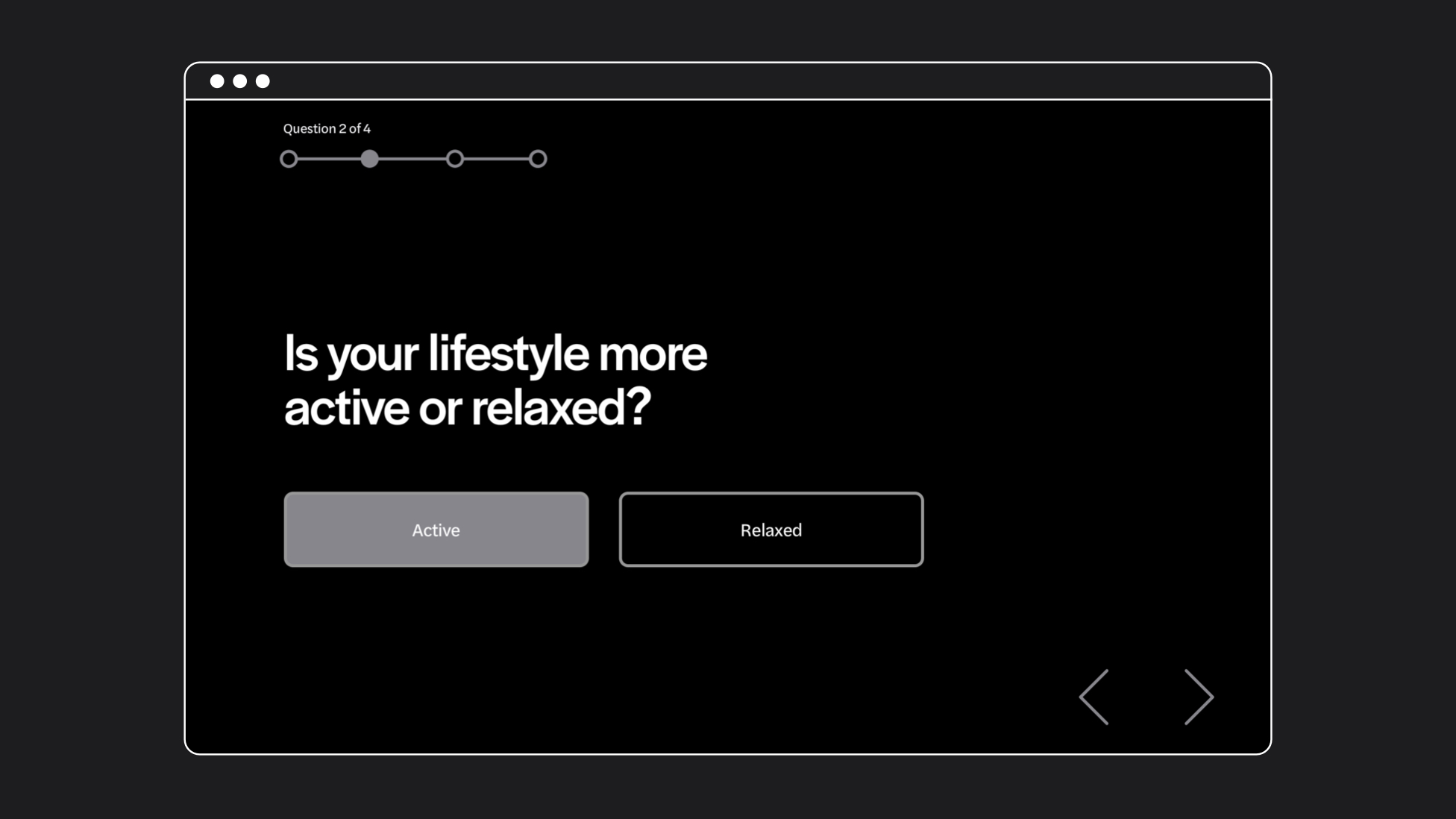
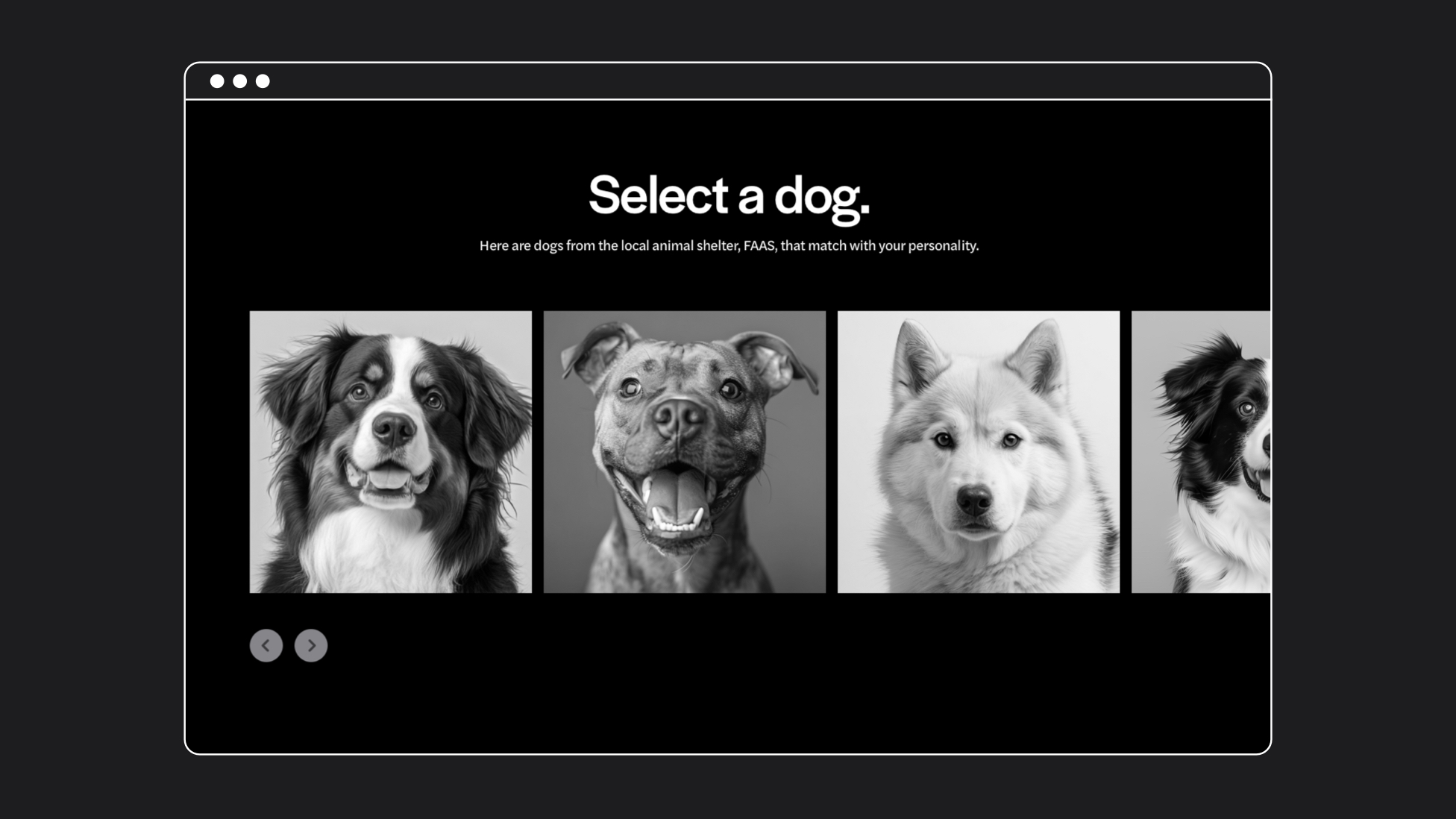
Users wanted direct next steps, so we added shelter contact info and clearer cues to scroll for more details. Research showed social sharing felt irrelevant here, so it was removed to match user priorities.
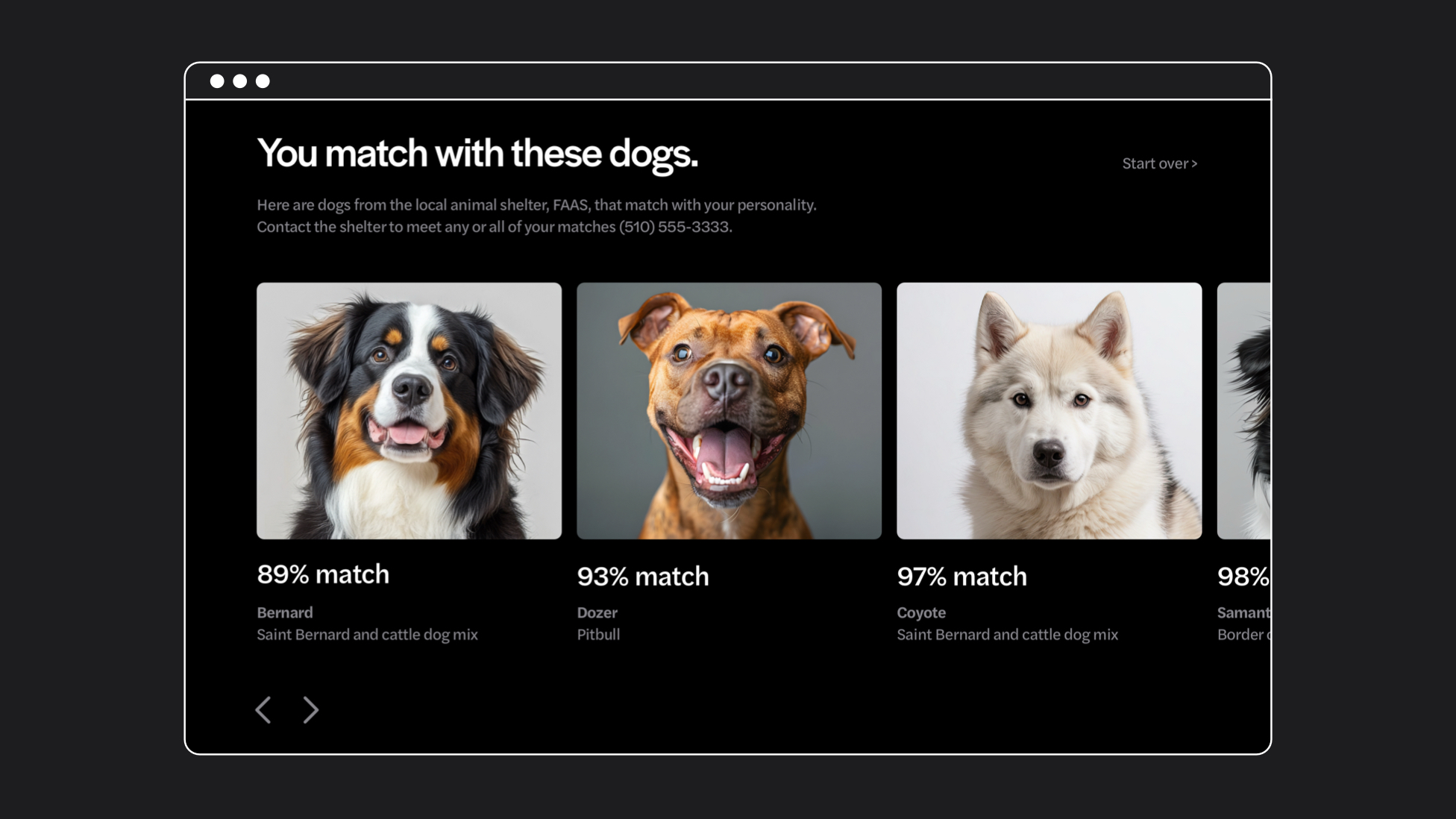
User testing revealed some key insights that ultimately reshaped the entire experience. While the original game-like interface wasn’t a failure, it quickly became clear that it wasn’t the most effective solution. Testers consistently expressed that the experience felt longer than expected and that they wanted to reach their pet match more quickly. Many users described the game format as fun, but not efficient—especially for something they expected to complete in just a few minutes.
By digging deeper into their feedback, patterns began to emerge: users valued clarity, speed, and a sense of progress over playful interactions. That insight brought me back to the drawing board. I restructured the entire flow from a game into a streamlined, survey-style experience that preserved the personality of the project but removed unnecessary friction. The result is a cleaner, quicker, more intuitive journey—one that reflects what users actually needed rather than what I initially imagined.
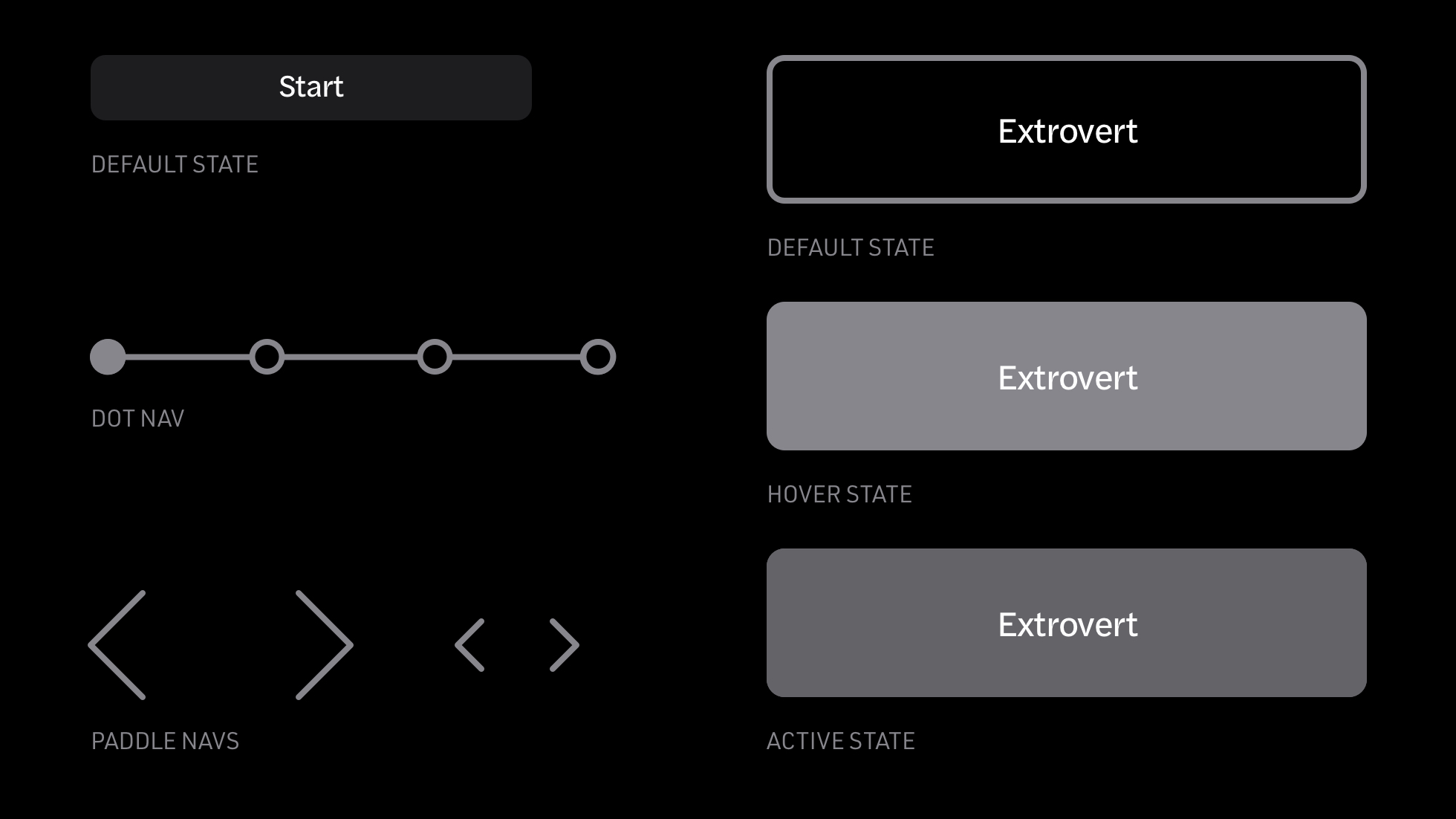
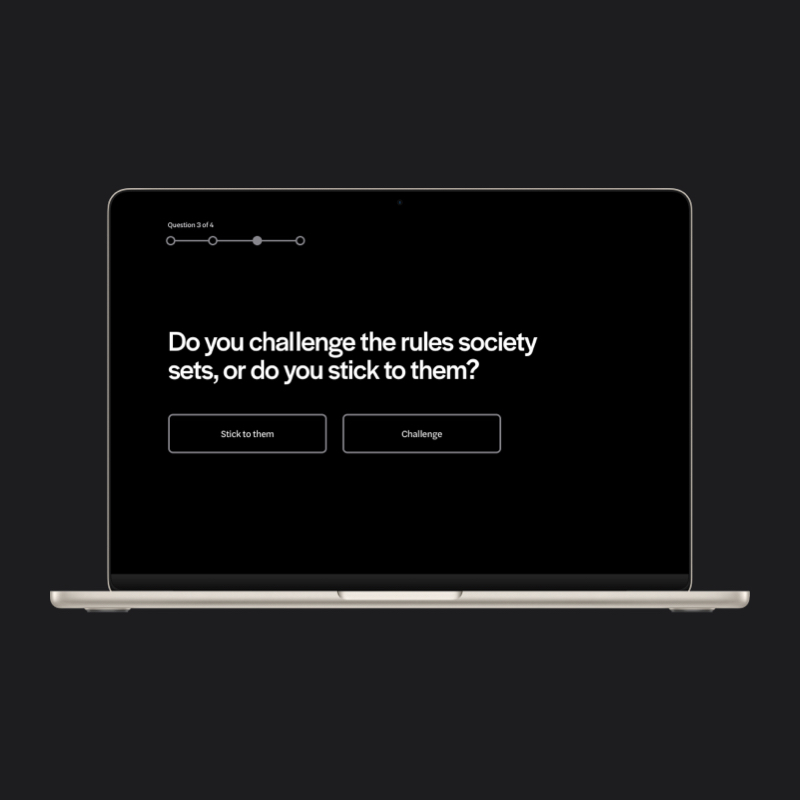
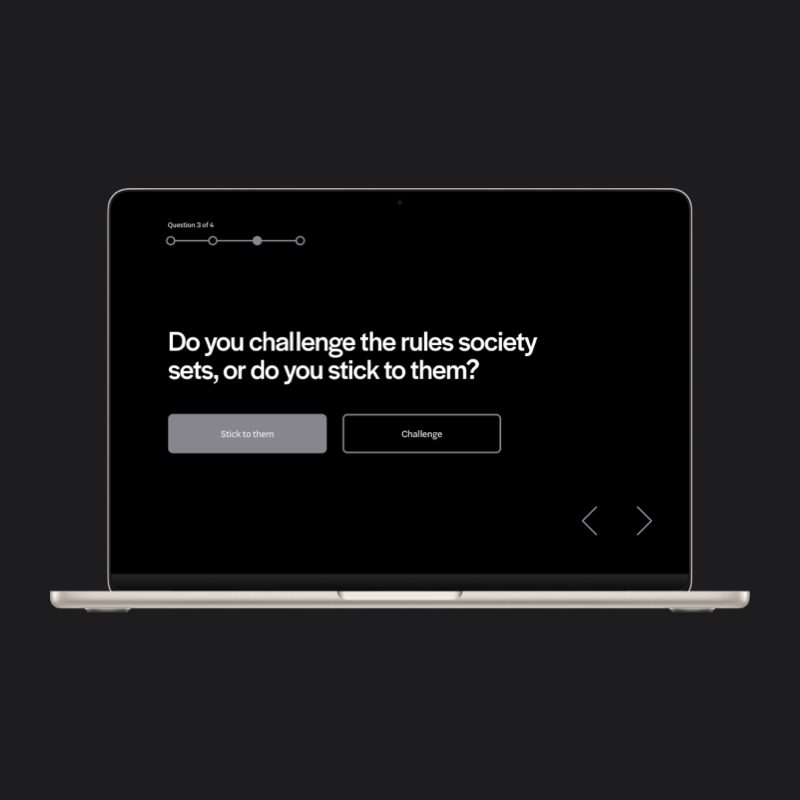
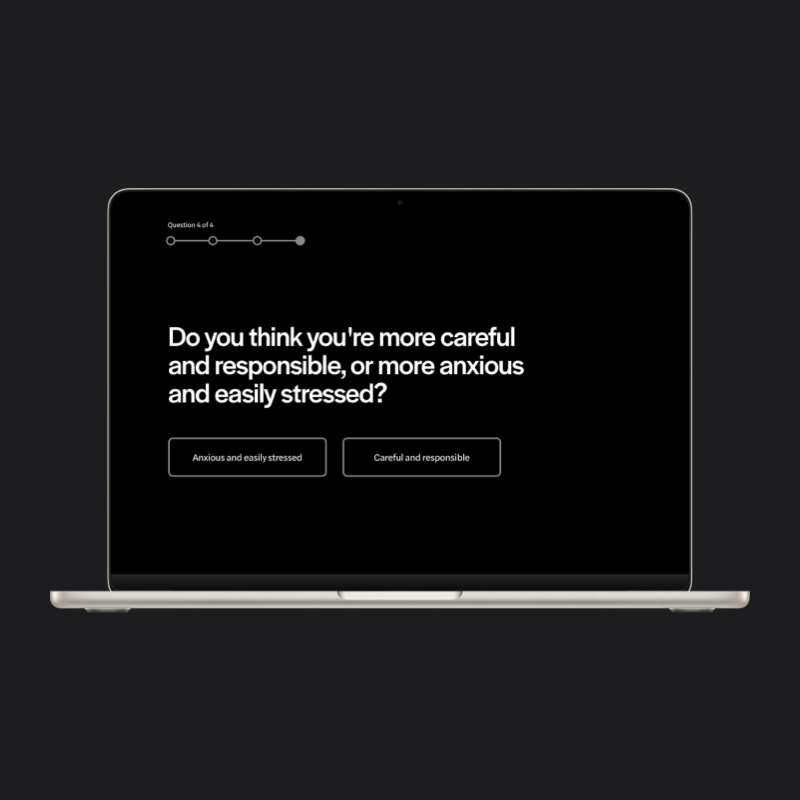
The color palette is intentionally neutral, allowing users to stay focused on what matters most—their personality and their potential match. Research showed that bright or high-saturation palettes distracted from the content, so I leaned into soft grays and whites to create a calm, unbiased environment. The UI uses simple geometric shapes to support wayfinding and interactive cues—elements like the paddle navigation and buttons were designed to feel clear, familiar, and immediately scannable.

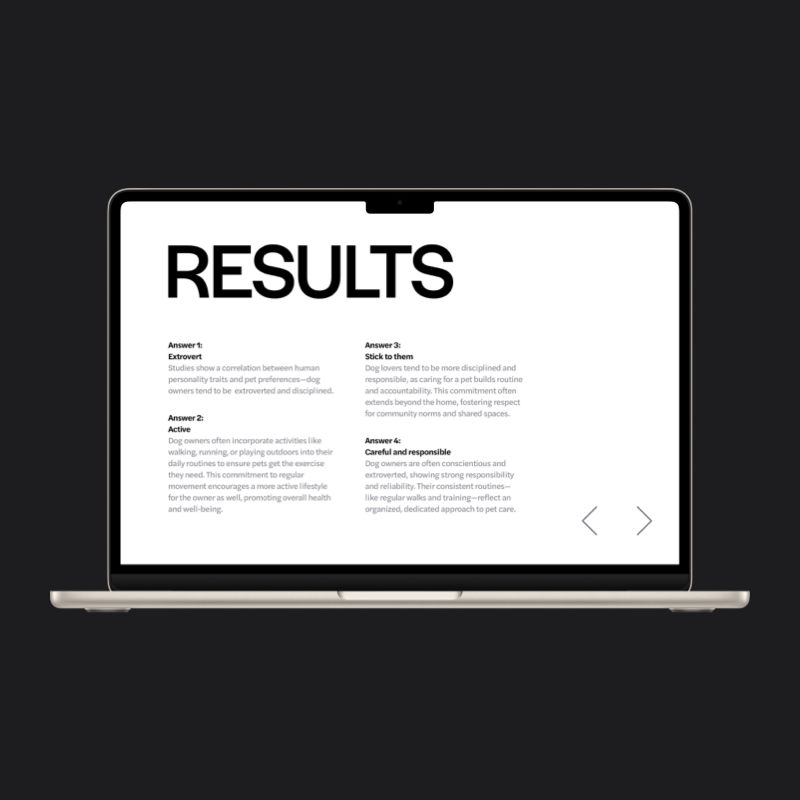
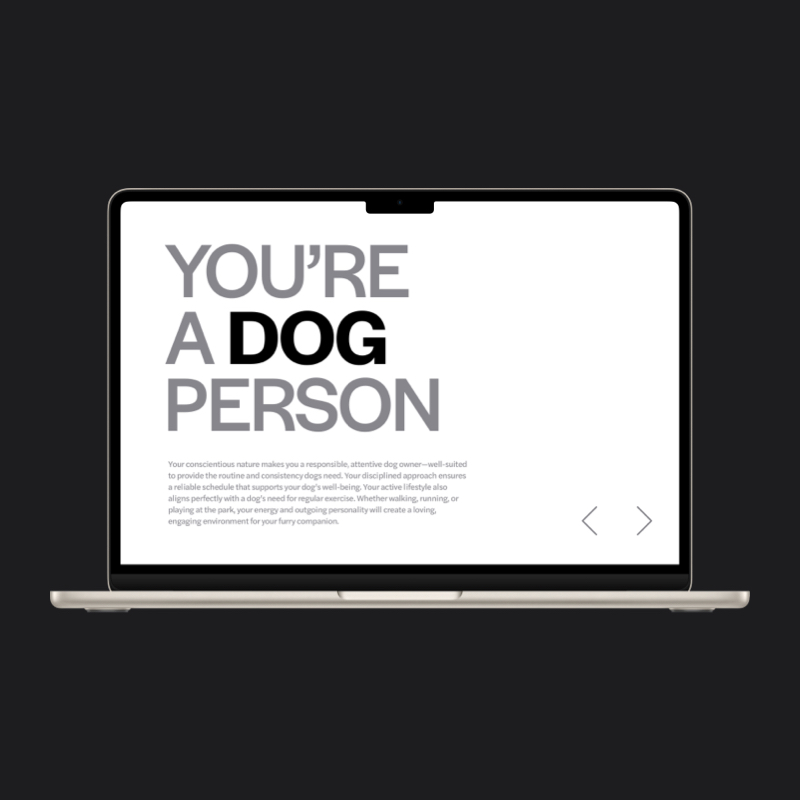
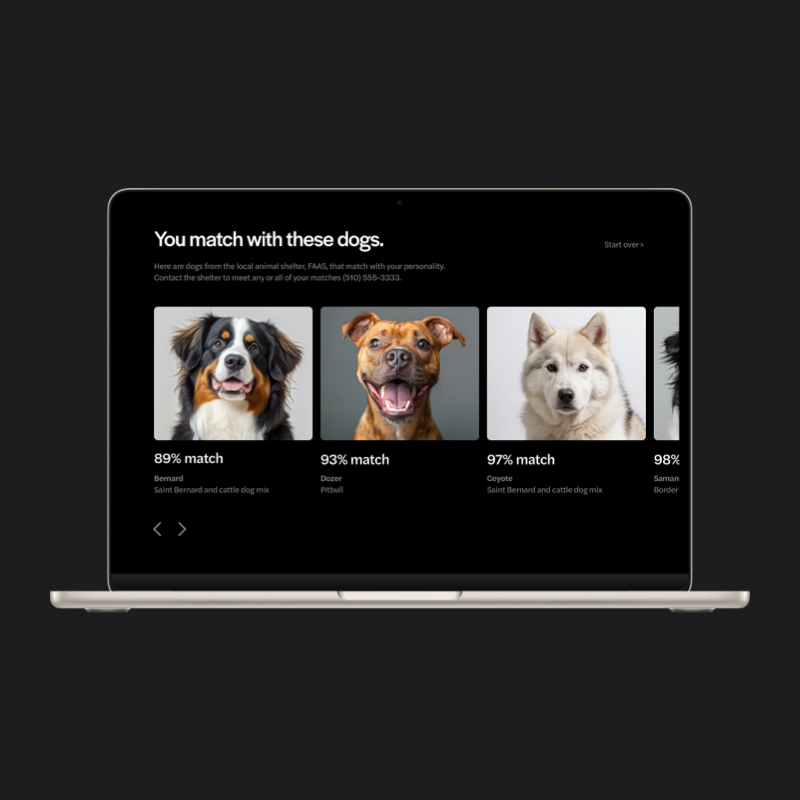
The homepage showcases cat-plus-dog imagery for immediate clarity, addressing research feedback that the original dog-and-human pairing implied a dog-only result. The four question pages maintain identical aesthetics and functionality to reduce cognitive load and support quick, predictable interactions. The results page then summarizes the user’s answers, reinforcing that the experience is rooted in their personality. From there, the pairing page reveals which type of animal they match with in a simple, emotionally clear layout. Finally, the pet pairing page offers a carousel of adoptable pets—complete with facility details and contact information—fulfilling user requests for actionable next steps in the adoption journey.
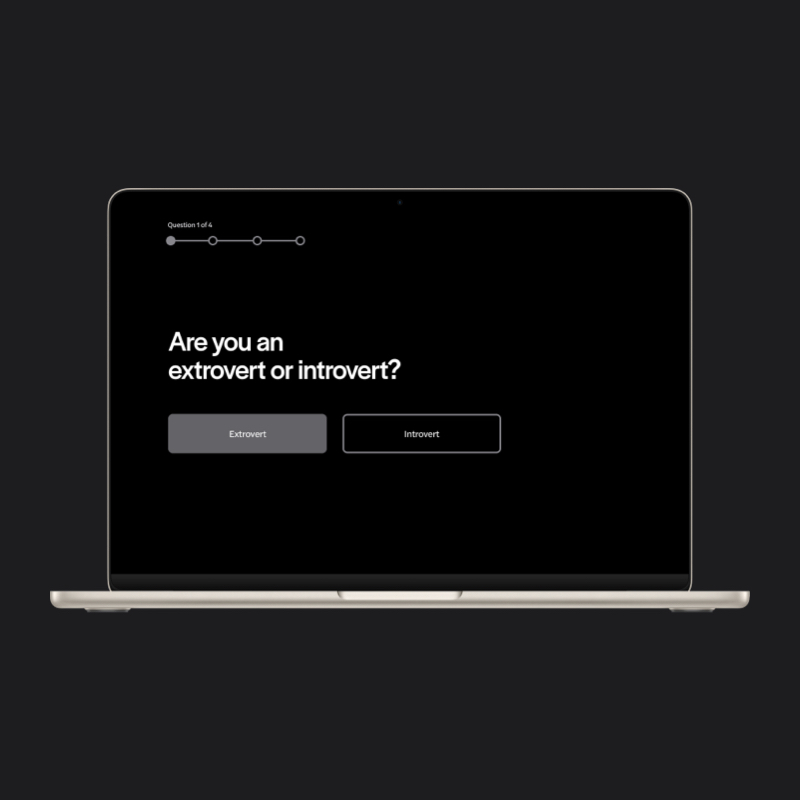
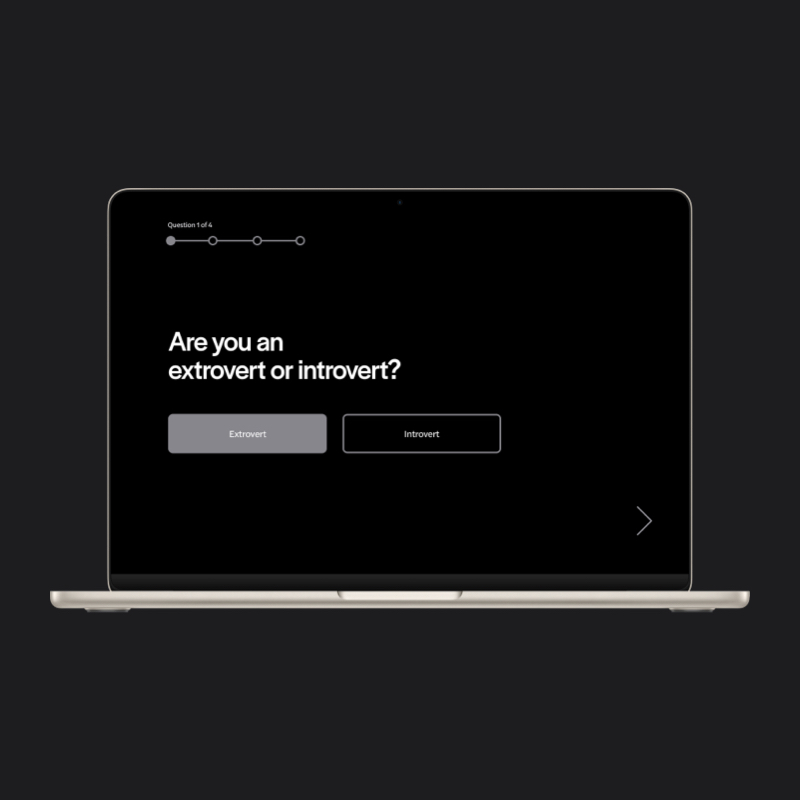
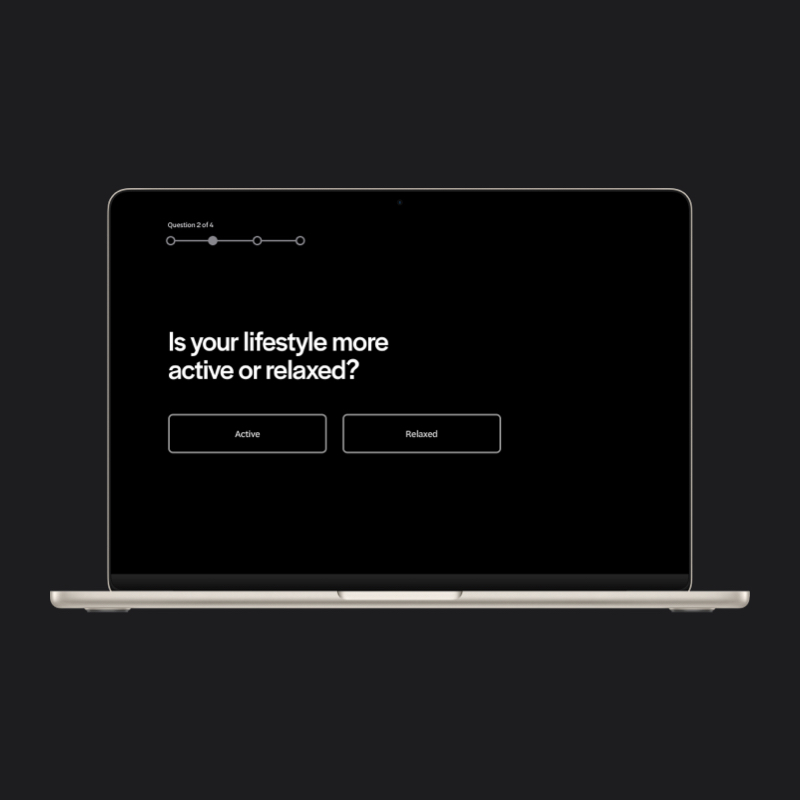
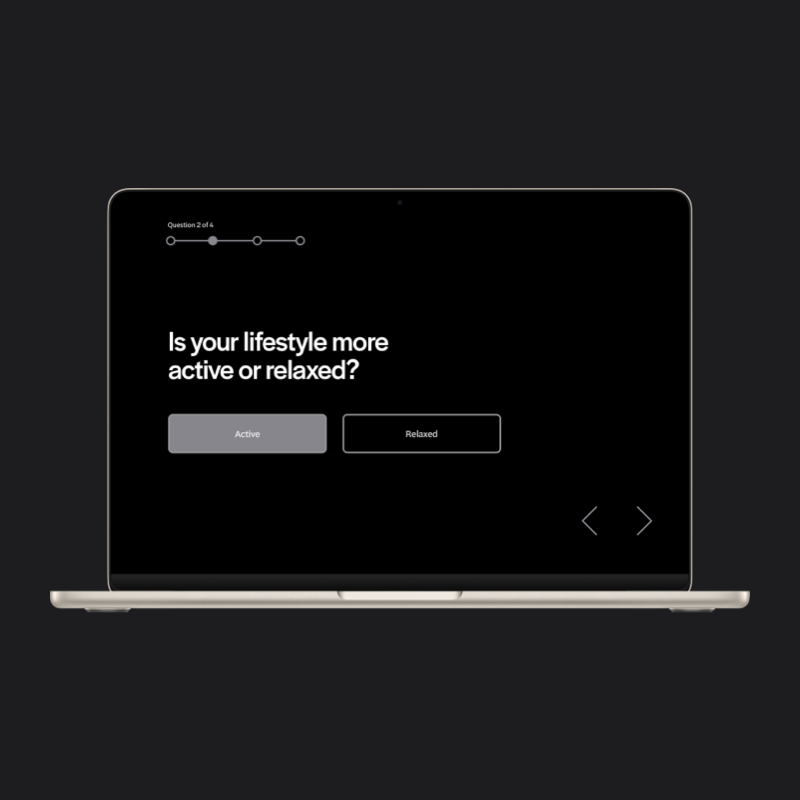

The Fursona project reimagined pet adoption by pairing human and animal personalities to create lasting, compatible relationships. Research and testing revealed users valued speed, clarity, and actionable results over game-like interactions, leading to a streamlined, survey-style experience. The platform achieved over 95% user satisfaction, reduced mismatched adoptions, and empowered users like Jason and Jezra to confidently find pets that fit their lifestyles. Thoughtful visual design, neutral palettes, and clear interaction patterns made the experience intuitive and emotionally resonant, demonstrating how empathy-driven UX can enhance meaningful human-animal connections.